
Description
Acidic water rarely announces itself the way iron or sulfur does. There’s no smell, no obvious stain at first — just a slow, steady corrosion working on your copper pipes year after year. Eventually that shows up as pinhole leaks, blue-green staining around fixtures, or a metallic taste in your water. Calcite is the natural fix for this, and it’s been the standard acid-neutralizing media in residential water treatment for decades.
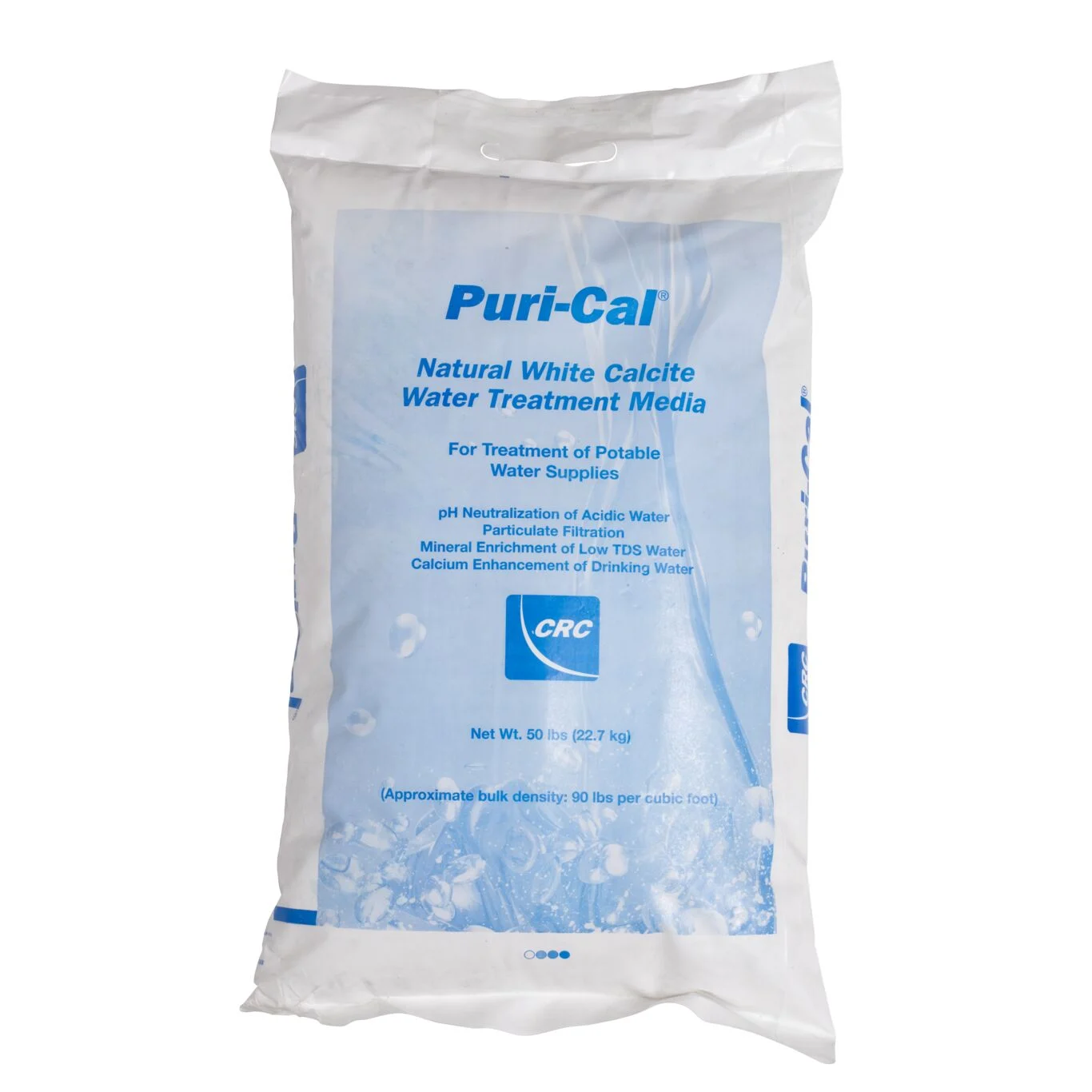
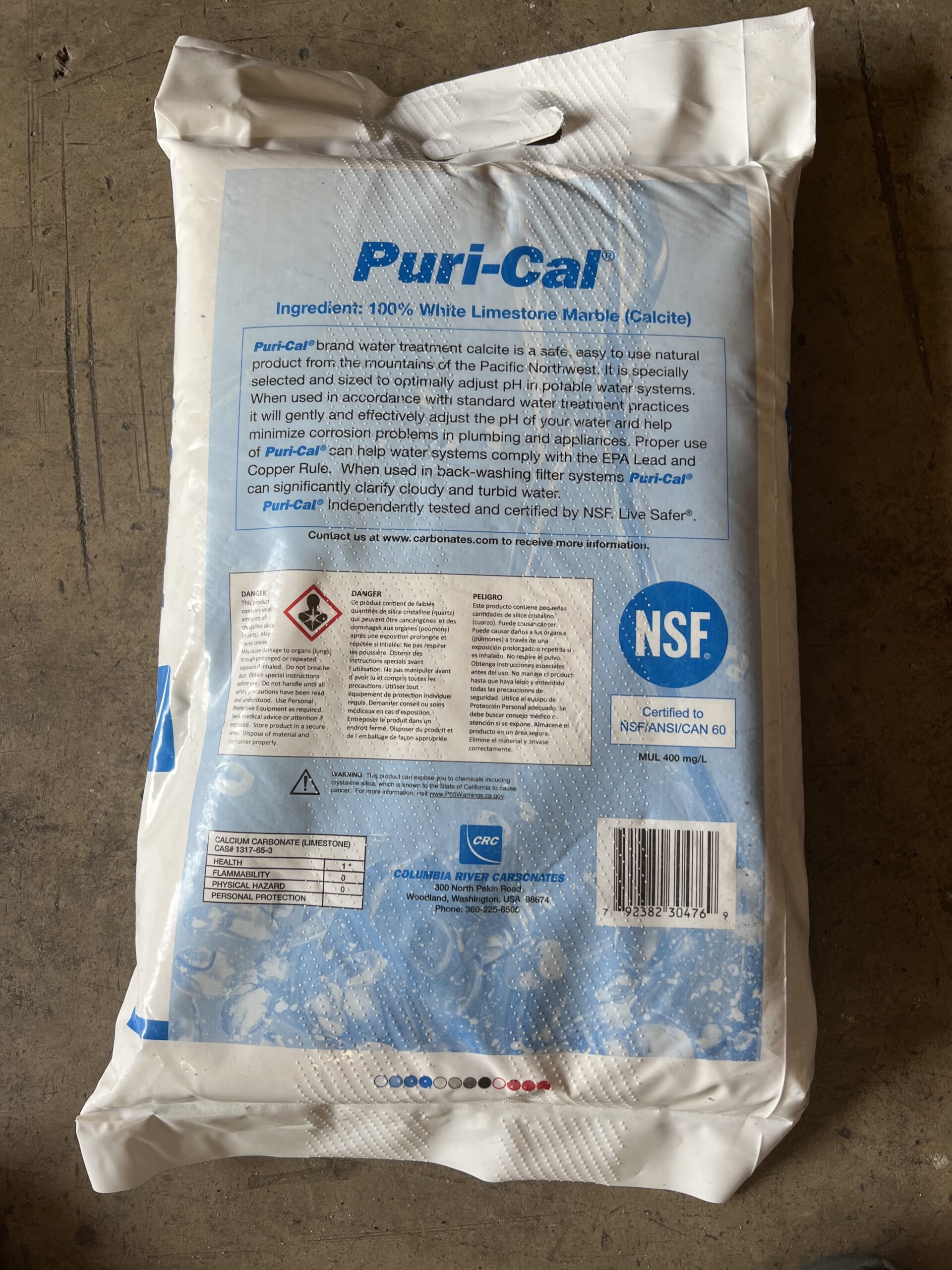
This is a naturally occurring calcium carbonate media — essentially crushed, screened marble. As acidic water flows through it, the calcite slowly dissolves, releasing calcium carbonate that raises the water’s pH toward a safer, non-corrosive range.
Why Calcite Doesn’t Overcorrect
One of calcite’s better-known traits is that it’s self-limiting. Once the water reaches a non-corrosive equilibrium, the reaction naturally slows down — calcite won’t keep pushing your pH higher and higher the way some other neutralizing media can. Under normal conditions, this means you get the correction you actually need without ending up with overly alkaline water on the other end.
As the calcite dissolves and neutralizes incoming acidic water, it also reduces the tendency of that water to leach copper, lead, and other metals out of your plumbing — which is the root cause of the staining and metallic taste that acidic water is known for.
You may also interested in Birm filter media for iron. 1 cu. ft. bag.
Maintenance: Backwashing and Replenishing
Two separate things keep a calcite bed working well over time, and it helps to know the difference. Periodic backwashing loosens the bed, prevents packing, and keeps the media classified properly so service flow rates stay high — this is routine maintenance, not media replacement. Separately, because calcite is consumed as it neutralizes acid, the bed level will drop over time and needs to be topped off periodically. How often depends on your water’s starting pH, your household’s water usage, and overall water chemistry — more acidic water or higher usage means more frequent replenishment.
One Thing Worth Knowing: Hardness
Since calcite works by adding calcium carbonate to your water, treated water will come out slightly harder than it went in. For most households this isn’t a major issue, but if your water was already on the harder side before treatment, you may want to consider adding a water softener downstream of the neutralizer.
For Lower pH Water: Pairing Calcite with Corosex
Calcite works well for moderately acidic water, but it reacts relatively slowly. For water with a lower starting pH, calcite is often blended with Corosex (magnesium oxide), which reacts faster and can correct more aggressive acidity. Combining the two gives you Corosex’s higher-flow neutralizing power along with calcite’s steadier, longer-lasting correction — covering a wider range of acidic water conditions than either media would on its own.
Specifications
| Feature | Details |
|---|---|
| Media Type | Natural Calcium Carbonate (Calcite) |
| Fill Volume | 1/2 Cubic Ft (approx. 50 lbs) |
| Composition | CaCO3 95% min. / MgCO3 3% max. |
| Color | Near White |
| Effective pH Range | Approx. 5.6 – 6.9 (calcite alone) |
| For Lower pH Water | Blend with Corosex for extended correction range |
| Recommended Bed Depth | 24 – 30 inches |
| Backwash Rate | 8 – 12 GPM per sq. ft. |
| Suitable Tank Size | 8″ x 44″ (typical for 1/2 cu ft fill) |
| Maintenance | Periodic backwashing + media replenishment as calcite dissolves |
| Typical Replenish Interval | Approx. every 12–36 months, depending on pH and usage |
| Side Effect | Increases water hardness slightly — softener may be needed downstream |
| System Type | Gravity-fed or pressurized water treatment systems |
Calcite remains one of the simplest, most cost-effective ways to correct acidic water — no chemicals to dose, no electricity required, just a natural mineral doing what it’s always done. Whether you’re refilling an existing neutralizer tank or setting one up for the first time, this 1/2 cu ft bag gives you a straightforward top-off or starter fill for standard residential systems.

Reviews
There are no reviews yet.