
Description
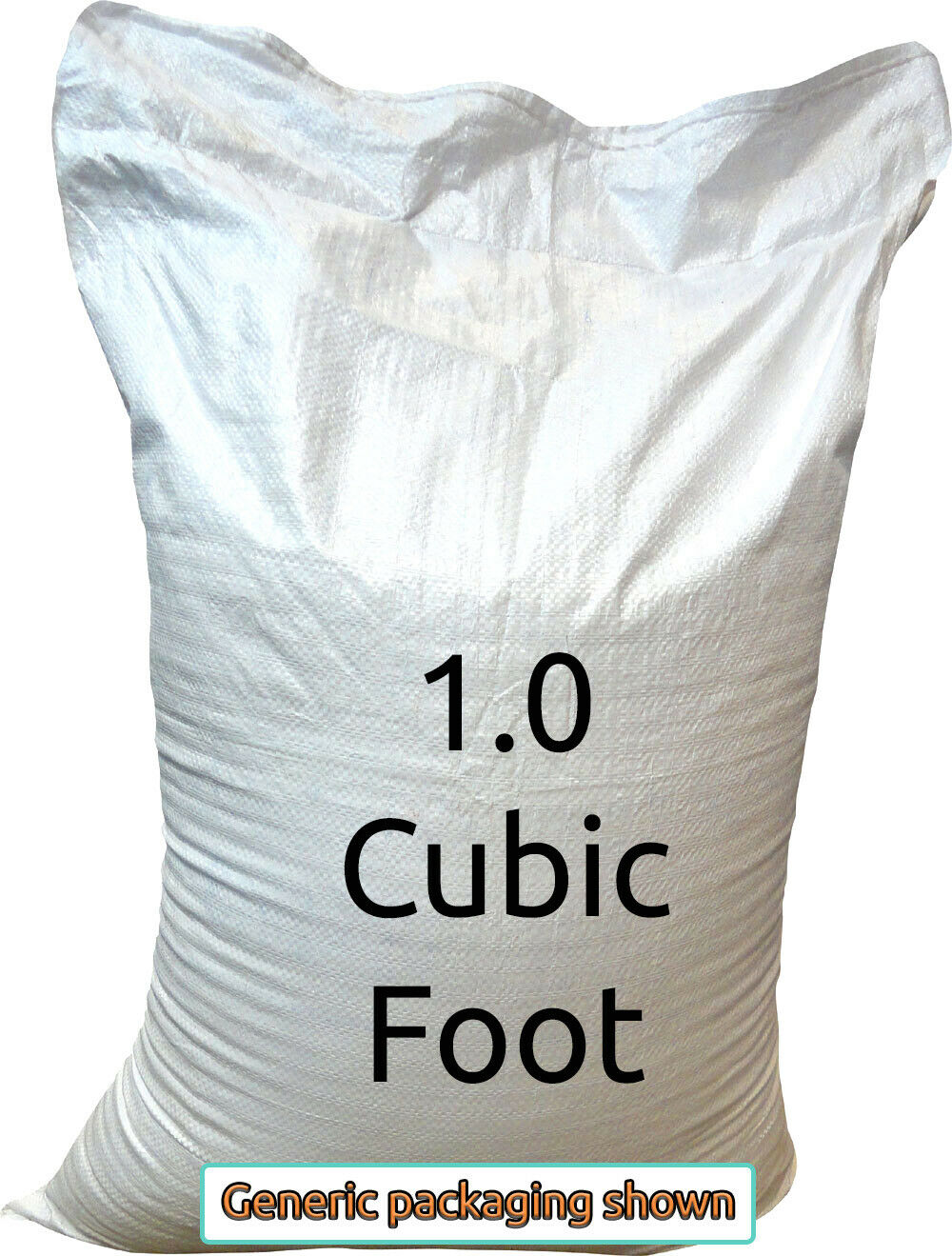
Well water with dissolved iron usually shows itself before you even test for it — a reddish-brown tint, rust staining on sinks and tubs, or laundry coming out with orange streaks. This 1 cubic foot bag of Birm filter media is one of the most established, cost-effective ways to deal with it, and it’s been a standard in residential and light commercial water treatment for decades.
What makes Birm different from a lot of other iron removal methods is that it isn’t a consumable chemical treatment. It’s a catalyst — meaning it enables a reaction without being used up in the process. That’s a real economic advantage over methods that require ongoing chemical dosing.
How Birm Actually Works
In most well water, dissolved iron exists in a form called ferrous bicarbonate — a soluble state that passes right through standard filters because there’s nothing solid to catch. Birm solves this by acting as a catalyst between dissolved oxygen already in the water and the iron itself, speeding up the natural oxidation reaction that converts soluble ferrous iron (Fe++) into insoluble ferric iron (Fe+++). That ferric iron precipitates out as ferric hydroxide — a solid that Birm’s granular structure can physically trap and filter out.
Because Birm isn’t consumed during this reaction, it keeps working reaction after reaction. Maintenance is limited to periodic backwashing, which flushes out the trapped precipitate and resets the media bed — no chemical regeneration, no salt, no ongoing consumable costs.
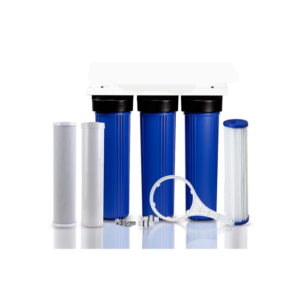
Recommended add-on: Protect your media from sediment fouling with our Sediment Pre-Filter Kit (4.5″x10″).
Real Advantages Over Other Iron Removal Methods
- Long service life with low attrition loss — Birm holds up well over years of regular use
- Wide temperature tolerance — performs reliably across a broad range of water temperatures
- High removal efficiency when water conditions fall within the required range
- No ongoing chemical costs — regeneration is just backwashing, not a consumable additive
- Low labor requirement — once installed, maintenance is minimal
Water Conditions Required for Birm to Work Properly
Birm is effective, but it does have specific water chemistry requirements. Before installing, confirm your water meets these conditions:
- No oil or hydrogen sulfide present in the water
- Organic matter content no higher than 4–5 ppm
- Dissolved oxygen (D.O.) content at least 15% of the iron content
- Water pH of 6.8 or higher
If your water’s pH runs below 6.8, Birm won’t perform at its best on its own. In that case, a neutralizing media like Corosex, calcite, or soda ash can be installed ahead of the Birm filter to raise pH into the effective range. Similarly, if dissolved oxygen levels are low, an aeration pretreatment step can bring D.O. up to where Birm needs it. Water containing hydrogen sulfide will need a different treatment approach (like KDF-85) either instead of or in combination with Birm, since Birm’s requirements specifically call for hydrogen sulfide-free water.
Specifications
| Feature | Details |
|---|---|
| Media Volume | 1 Cubic Ft per Bag |
| Removes | Dissolved Iron (up to ~8 ppm), Manganese (up to ~6 ppm) |
| pH Requirement | 6.8 – 9.0 |
| Dissolved Oxygen Requirement | At least 15% of iron content |
| Organic Matter Limit | 4–5 ppm maximum |
| Hydrogen Sulfide | Must not be present |
| Regeneration | Periodic backwashing only — no chemicals required |
| Service Flow Rate | 3.5–5 GPM per sq. ft. |
| Backwash Flow Rate | 10–12 GPM per sq. ft. |
| Recommended Bed Depth | 30–36 inches |
| Typical Life Expectancy | 4–5 years, depending on water conditions and usage |
| System Type | Gravity-fed or pressurized water treatment systems |
Which Tank Size Do You Need?
Birm media volume is matched to your tank size. As a general guide:
| Tank Size | Birm Media Volume |
|---|---|
| 8″ x 44″ | 0.5 cu ft |
| 9″ x 48″ | 1 cu ft |
| 10″ x 54″ | 1.5 cu ft |
| 12″ x 48″ | 2 cu ft |
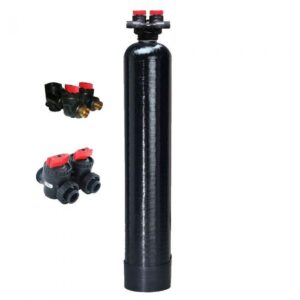
This 1 cu ft bag is sized for a standard 9″x48″ tank. If you’re unsure which size fits your existing system, check your tank’s dimensions before ordering.
Who This Media Is For
- Well water homeowners dealing with reddish-brown water, rust staining, or a metallic taste from dissolved iron
- Households also dealing with manganese, which often accompanies iron in well water and causes dark staining
- Anyone wanting a chemical-free iron removal method instead of ongoing salt or chemical regeneration
- Existing Birm system owners needing replacement media for their current tank

Reviews
There are no reviews yet.