

Description
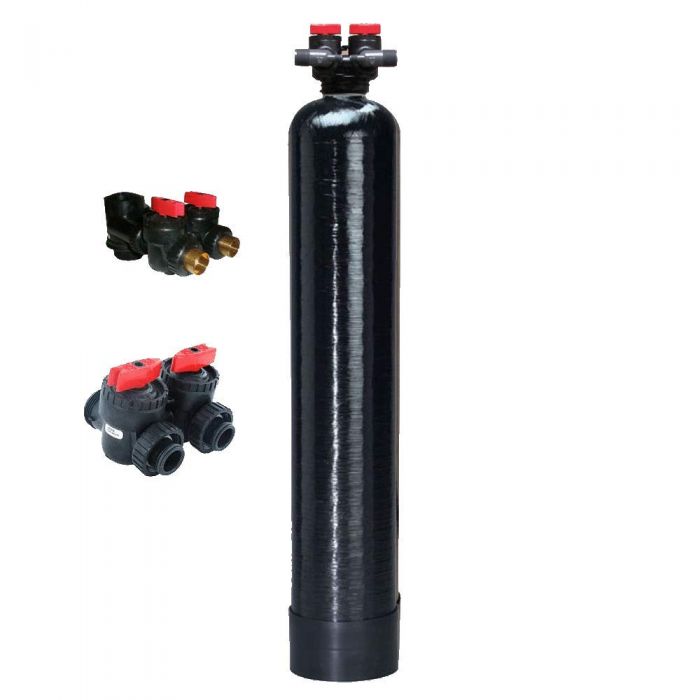
Standard carbon filters are good at removing chlorine, but many water utilities have switched to chloramine — a combination of chlorine and ammonia — because it’s more stable and produces fewer disinfection byproducts. The problem is, chloramine is genuinely harder to remove. Standard granular activated carbon has limited capacity for it. Catalytic carbon is the media built specifically to handle that gap.
Why Catalytic Carbon Is Different
This system uses 12×40 mesh catalytic, high-activity granular activated carbon, made by steam-activating select coconut shell charcoal. Regular carbon works mainly through adsorption — trapping contaminants and holding onto them. Catalytic carbon does that too, but it also has a much stronger ability to catalyze — meaning it actively converts contaminants into harmless byproducts rather than just holding them. That catalytic action is what makes it so effective specifically against chloramine and hydrogen sulfide, which standard carbon struggles with.
The large micropore volume of this carbon also makes it particularly effective against low molecular weight organic compounds and their chlorinated byproducts — things like chloroform and other trihalomethanes (THMs), which standard filters often miss.
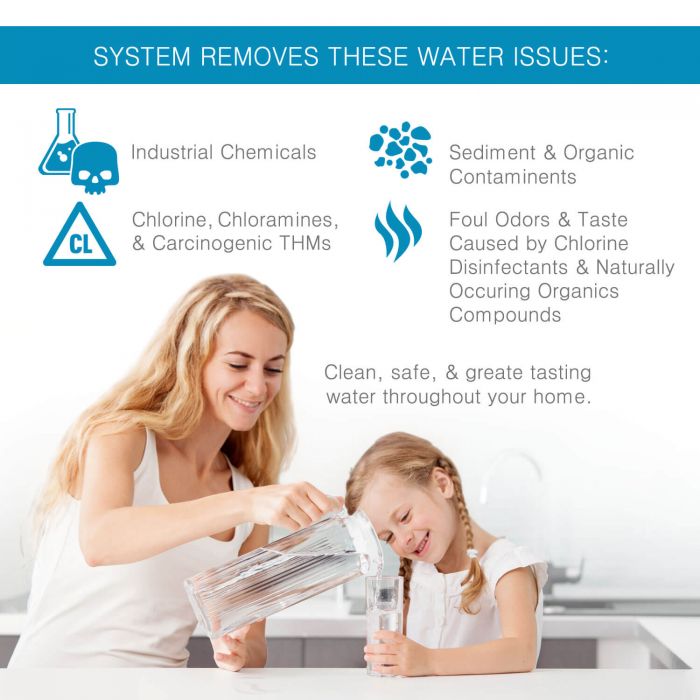
What This System Removes
- Chloramines (chlorine + ammonia disinfectant)
- Hydrogen sulfide (rotten egg odor, in light to moderate loads)
- Chlorine, taste, and odor
- Sediment
- Trihalomethanes (THMs) and related organic compounds
If your well water carries very high iron or sulfur levels, catalytic carbon alone may not be enough — pairing this system with a KDF 85 MediaGuard gives you dedicated iron and hydrogen sulfide reduction alongside the catalytic carbon’s chloramine and chemical removal.
Why Choose the In/Out Valve Version
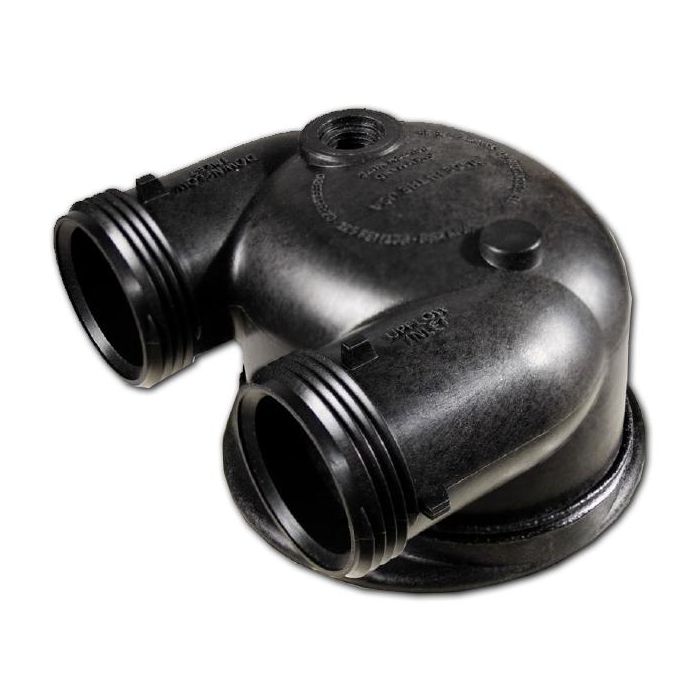
This system uses a simple in/out valve rather than an automatic backwashing control head. Water flows in, passes through the 2.0 cu ft catalytic carbon bed, and flows out — no electricity, no programming, nothing to set or maintain beyond periodic media changes. This keeps the system simpler and more affordable than a backwashing setup, and it’s a solid choice for households that don’t want to deal with a drain line or automatic controller.
Want automatic self-cleaning instead? See our Fleck 5600SXT Backwashing Catalytic Carbon Filter for a hands-off, no-monthly-maintenance option.
Looking for a self-cleaning option instead? If you’d rather not handle media changes manually and don’t mind running a drain line, see our Backwashing Catalytic Carbon System (12″x52″), which automatically flushes sediment and refreshes the carbon bed on a schedule.
Specifications
| Feature | Details |
|---|---|
| Media Type | 12×40 Mesh Catalytic Coconut Shell Carbon |
| Media Volume | 2.0 Cu Ft (Pre-loaded) |
| Tank Size | 12″ x 52″ |
| Valve Type | In/Out (Non-Backwashing) |
| Removes | Chloramine, Chlorine, Hydrogen Sulfide, Sediment, THMs, Tastes & Odors |
| Best For | 3–5 Bathroom Homes |
| Power Required | None |
| Installation Type | Whole House / Point of Entry |
| Recommended Add-On | KDF 85 MediaGuard (for high iron/sulfur water) |
Who This System Is For
- Homes on municipal water with chloramine disinfection — check your utility’s water quality report if unsure
- Households wanting a simple, low-maintenance system without electricity or drain line requirements
- 3–5 bathroom homes needing whole-house capacity without oversizing
- Well water households with light hydrogen sulfide alongside chlorine or chemical concerns
Get real chloramine and chemical protection at every tap — simple, reliable, and built to last.

Reviews
There are no reviews yet.